
"16th century"
700 article(s) found

Panama Estate Coffee Beans
Arabica species originated in Ethiopia's Abyssinia Plateau (now Ethiopia Plateau). It was mainly eaten as medicine in the early stage (Islamic couples used it as a secret medicine for physical and mental treatment or to wake up). In the 13th century, it cultivated the habit of baking and drinking. In the 16th century, it was introduced into Europe via Arabia, and then became a favorite drink of people all over the world.

A brief introduction to the description of the flavor and aroma characteristics of coffee beans in the soft and pure Renas Manor.
The coffee harvest lasts from November to March. The fresh fruit of coffee is picked by hand. The city of El Salvador has a large number of 16th-century buildings and religious buildings, many of which are decorated with 17th-and 18th-century carvings and stripes made of colored mud, reflecting the characteristics of the colonial period. Through a forest of monuments and

How did coffee, the foundation of coffee culture, be introduced into Arabia?
European historians argue that as early as 800 years ago, there were artificial coffee trees for trade in Yemen in the southern Arabian Peninsula, and there was historical evidence that at that time, there was indeed trade across the Red Sea between Yemen and Ethiopia. Based on this, people speculate that if the use of coffee was discovered by Ethiopians, then coffee

What is the brand of coffee beans the characteristics of coffee beans the introduction of coffee beans the method of growing coffee beans
In a broad sense, there are two kinds of coffee beans in the world, Arabica beans and Robosta beans. The earliest Arab way to eat coffee was to chew the whole fruit (Coffee Cherry) to absorb its juice. Then they mixed the ground coffee beans with animal fat as a physical supplement for long trips, and it was not until about 1000 AD that the green coffee beans were used.

A brief introduction to the History of Sumatra Mantenin Coffee beans description of the flavor of Indonesian Sumatran coffee
For more information about coffee beans, please follow the history of Sumatran coffee introduced to the Indonesian islands by the Dutch in the 16th century and first exported by the Dutch East India Company in the early 17th century. Netherlands
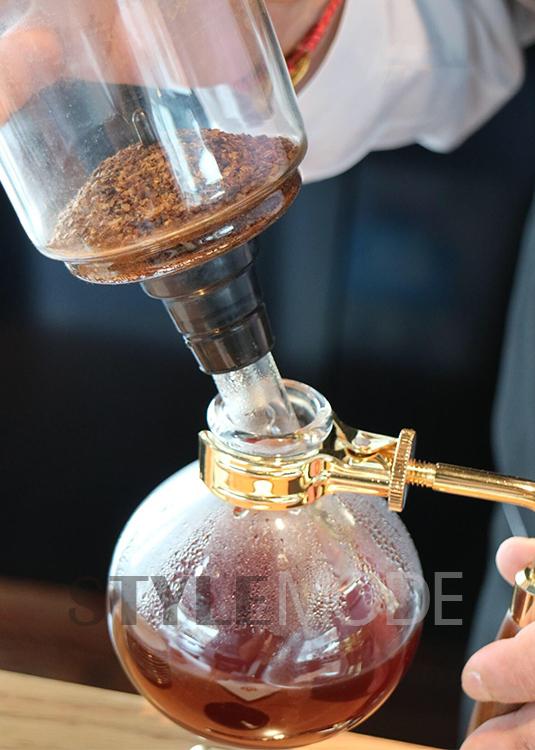
New information on domestic coffee competition: the 4th Pu'er Cup siphon Pot Competition landed in Beijing
The finals of the WSC (World Siphonist Championship) World siphon Pot Competition are held in Japan every September. Outstanding contestants from all over the world gather here to exchange skills, through smooth movements and rich coffee knowledge, while showing their coffee heritage, while transmitting their own elegant demeanor and connotation to the world. It is a very expressive and ornamental top in the coffee industry.

Coffee Culture Coffee and the Story of Arapai people
Coffee was the exclusive drink of Arabian people for more than 1000 years from the 7th century to the 17th century. Arabs brought the habit of drinking coffee to the countries they visited, from the Balkans to Spain to North Africa. After the decline of the Roman Empire, the center of world development gradually shifted to the Islamic world. Slowly, the word coffee entered the languages of countries all over the world in different forms.

History and Origin of Coffee Trees
It wasn't until around the 11th century that people started brewing coffee as a drink. In the 13th century, Ethiopian troops invaded Yemen, bringing coffee to the Arab world. Because Islam prohibits believers from drinking alcohol, some religious people believe that this drink stimulates nerves and violates the doctrine. Coffee shops were once banned and closed, but Egypt's Sultan believes that coffee does not violate the doctrine.

European Coffee History Coffee Culture how did Turkish Coffee Coffee come into Arabia?
European historians argue that as early as 800 years ago, there were artificial coffee trees for trade in Yemen in the southern Arabian Peninsula, and there was historical evidence that at that time, there was indeed trade across the Red Sea between Yemen and Ethiopia. Based on this, people speculate that if the use of coffee was discovered by Ethiopians, then coffee

The spread of coffee in China and the development of coffee shop culture
The development of coffee in China according to historical records, coffee was first planted in Taiwan in 1884, which opened the prelude to the development of coffee in China. The earliest coffee cultivation in mainland China began in Yunnan, when a French missionary brought the first coffee seedlings to Binchuan County in Yunnan Province at the beginning of the 20th century. For nearly a hundred years after that, coffee was only a star in the vast territory of China.

Espresso CAFFE starts a perfect day
If I don't drink coffee in the morning, I will be exhausted, like a dry piece of roast mutton. If John Sebastian Bach marks Italy with a dish or a food, coffee is the most appropriate. The relationship between Italy and coffee can be traced back to the 16th and 17th centuries. Today, coffee has become an important part of Italian life. In the ages of the rise of coffee
Why was coffee banned when it was first introduced into Germany? what can replace coffee?
The exchange of professional baristas please follow the coffee workshop (Wechat official account cafe_style) this time, I will take a look at the original episode of the coffee transmission to Europe. At that time, people thought that coffee was unlucky, coffee was not accepted by people, and its appearance was affected. In the case of coffee in Hungary, coffee has existed in Hungary since the end of the 16th century, but this Hungary is in Europe.

A brief introduction to the market price of pure and slightly sour boutique coffee beans in Renas Manor
There are also buildings and dwellings of different styles built in the next two centuries. The city of El Salvador was an important meeting place of European, African and North American civilizations in the 16th and 18th centuries, and it was also a model for the successful transplantation of Renaissance urban architecture to colonial cities. Bahia culture originated from African slave culture at that time, and African traditional music, dance, art, food and

Introduction to the production area with excellent medium purity Berman Manor coffee flavor
Kenya AA coffee beans Kenya is adjacent to Ethiopia, the origin of Arabica coffee trees to the north, but it was not until the beginning of the 20th century that coffee cultivation began. Missionaries introduced Arabica trees from Yemen in the 19th century, but did not plant them in large quantities. Coffee was not cultivated on a large scale until 1893, when Brazil's ancient "bourbon" coffee seeds were introduced.

Yemeni coffee is good, Yemeni mocha coffee culture
Professional barista exchanges, please pay attention to coffee workshop (Weixin Official Accounts cafe_style) Yemen coffee: When it comes to coffee, people think more of "refreshing." Coffee spread to Yemen for this reason. Between the 15th and 16th centuries, during the Ming Dynasty in China, a famous hot drink became popular. It is said that an imam of Mocha in Yemen and

Roasting Coffee Learning Materials: the first lesson for Coffee roasters-the concept of Baking
Professional coffee knowledge exchange more coffee bean information please follow the coffee workshop (Wechat official account cafe_style) Coffee Learning: about coffee bean roasting, I believe it is definitely the most dramatic and controversial part of the whole coffee bean processing system. According to the coffee literature, human beings have known how to roast coffee from the 16th century to the 20th century.
A preliminary study on the Origin, Development, spread and Beverage Culture of Coffee
Coffee, tea and cocoa are the three major beverages in the world, which are consumed by about LM people all over the world, and their consumption is second only to drinking coffee in Europe and the United States. Coffee consumption is also becoming more and more popular in China and other eastern countries. However, in Chinese academic circles, there are no papers and monographs on coffee from the perspective of agricultural history and custom history.

The knowledge of coffee beans what is the knowledge of coffee?
1. The origin of the Arabica species (scientific name Coffea arabica) is the Abyssinia Plateau of Ethiopia (now the Ethiopian Plateau). In the early days, it was mainly eaten as medicine (Islamic couples used as a secret medicine to cure the body and mind or to awaken the brain). It developed the habit of baking and drinking in the 13th century and was introduced into Europe through the Arab region in the 16th century.

Dangerous drinks: how Coffee creates a Culture of Resistance
Professional coffee knowledge exchange more information about coffee beans please follow the coffee workshop (Wechat official account cafe_style) Coffee as a "Drug" David. In his book five hundred years of Addiction, David T. Courtwright tries to define the English word "Drug" as a neutral concept: "addiction", that is, all addictive or addictive.

Guatemala's pico tenango coffee name origin and history pico tenango coffee flavor such as
The coffee bean gets its name from its place of origin in Guatemala, Huehuetenango, or Huetenango. The name, taken apart to mean the place where the stars (ancestors) are located, is Nahuatl in Central America. huehue means "star," or heavenly ancestor, and the ending-tenango means